
Alpha Black Lotus
Widely considered the holy grail of trading cards, its extreme scarcity and central role in the history of competitive play make it a cornerstone of any collection.
Browse public cards added by real collectors. Search the catalog from the bar above, dig into the lore, and see who's collecting what.
Nine standout pieces from the Flesh and Blood catalog — the details collectors track, and how many shelves each one sits on. A fresh trio every ten seconds.
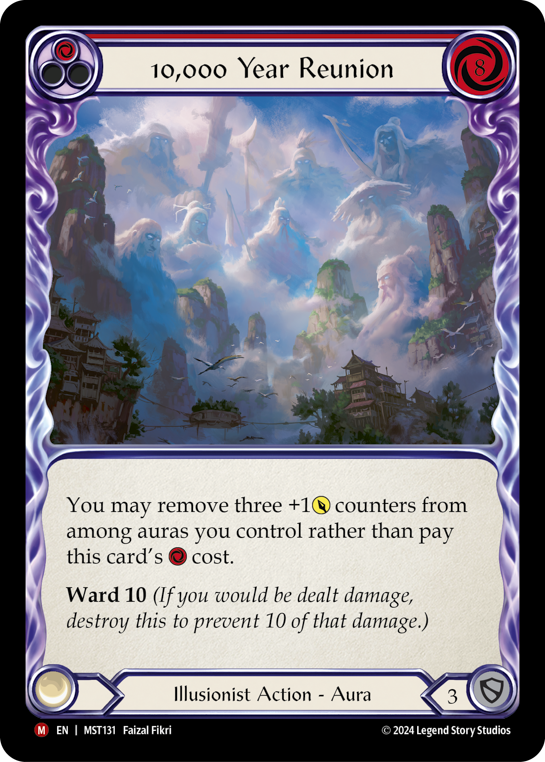 Flesh and Blood
As a majestic action card from the Part the Mistveil set, 10,000 Year Reunion reflects the intricate gameplay mechanics and thematic depth introduced in this expansion. Collectors and players often value such cards for their specific utility within the game's evolving strategies and their role in rounding out the set’s unique mechanical identity.
Flesh and BloodAs a majestic action card from the Part the Mistveil set, 10,000 Year Reunion reflects the intricate gameplay mechanics and thematic depth introduced in this expansion. Collectors and players often value such cards for their specific utility within the game's evolving strategies and their role in rounding out the set’s unique mechanical identity.
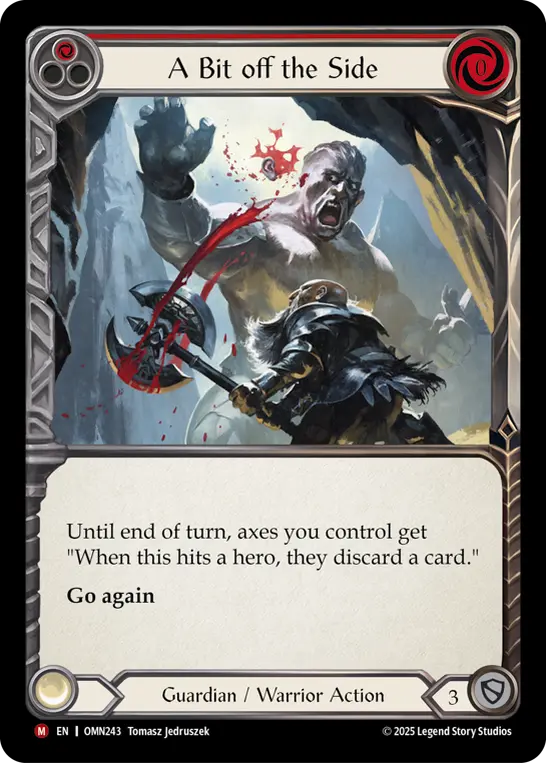 Flesh and Blood
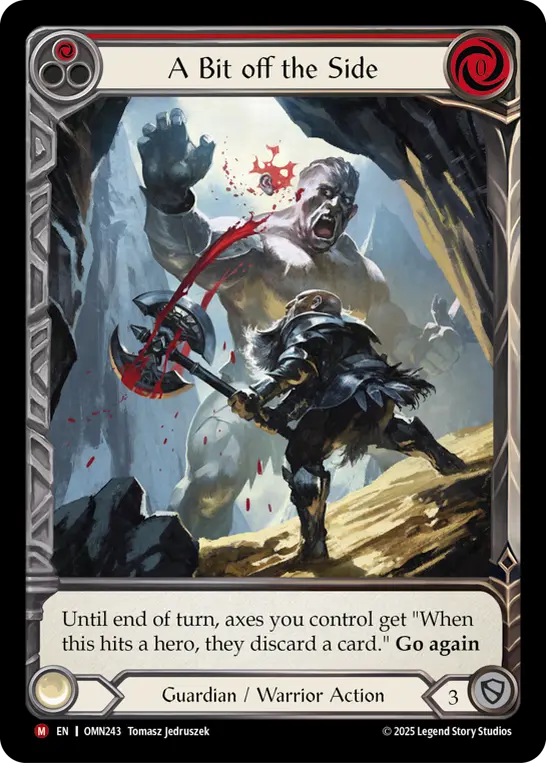
As a majestic-tier action card from the Omens of the Third Age set, "A Bit off the Side" is prized by collectors for its role in shaping the game's tactical landscape during this era. Its inclusion in the set reflects the intricate design philosophy of the Third Age series, marking it as a significant mechanical piece for both players and archivists of the game's history.
Collecting trading cards is a way to preserve moments of history, art, and competitive spirit. Whether driven by nostalgia or the thrill of the hunt, enthusiasts find deep connection in the tangible, tactile nature of these pieces. It is a hobby that transforms simple cardboard into storied artifacts of human creativity.
This era marked the modern birth of the trading card game genre, setting the template for deck-building mechanics and rarity structures that define the hobby today.
The market matured as digital gaming began to influence physical card design, leading to more complex gameplay and widespread community growth.
The rise of online marketplaces and global tournament circuits transformed trading cards into a worldwide cultural phenomenon, turning local game store communities into international networks.
A surge in interest for both playability and asset appreciation has elevated the prestige of rare cards, cementing them as significant items for serious collectors.
The cards collectors whisper about — the legendary finds that define the hobby.
Widely considered the holy grail of trading cards, its extreme scarcity and central role in the history of competitive play make it a cornerstone of any collection.
Awarded to winners of early illustration contests, this card is prized for its unique artwork and the very small number of copies ever distributed.
This card represents the peak of collector interest in early release variants, combining cultural impact with a distinct aesthetic that defines a generation.
Given to high-ranking players in the infancy of international tournaments, its rarity is tied directly to the legacy of the game's earliest competitive events.
Rarity notes come from general collector knowledge — not from collecto.rs collection data.
Flesh and Blood on collecto.rs are catalogued against the Flesh and Blood catalog, so the catalog stays consistent with the canonical source while every collector's copy can layer on personal condition, edition, and acquisition data. No public cards are catalogued on collecto.rs yet — be the first to add yours. Collections stay private by default; you choose what to make public.
The basics on collecting cards and how discovery works here.
collecto.rs is a free, structured catalog for flesh and blood collectors. Track each card you own with photos, notes, and acquisition history — and share what you collect when you want to.
The Flesh and Blood catalog is sourced from the Flesh and Blood catalog. Catalog metadata stays canonical and consistent across every collector who owns the same card; your own copy keeps its own condition, edition, and acquisition data on top.
Yes. Sign up with Google, Apple, or Facebook — there's no paid tier required to catalog your cards, upload photos, or share collections publicly.
Yes. Every collection on collecto.rs starts private. You can publish individual collections or items selectively, and unpublish at any time. Public collections are what powers the activity feeds on this page.
Each card you add is a distinct item — collectors often own multiple copies (different conditions, editions, or grades). Catalog-level identity is shared across collectors, so duplicates are counted at your collection level, not the catalog level.
Free forever. Private by default. Photos, notes, value tracking — all in one place.
Sign up free